The Last Soviets
2025
Wall Vinyl, lenticular prints, archival documents, video projection, and audio recording
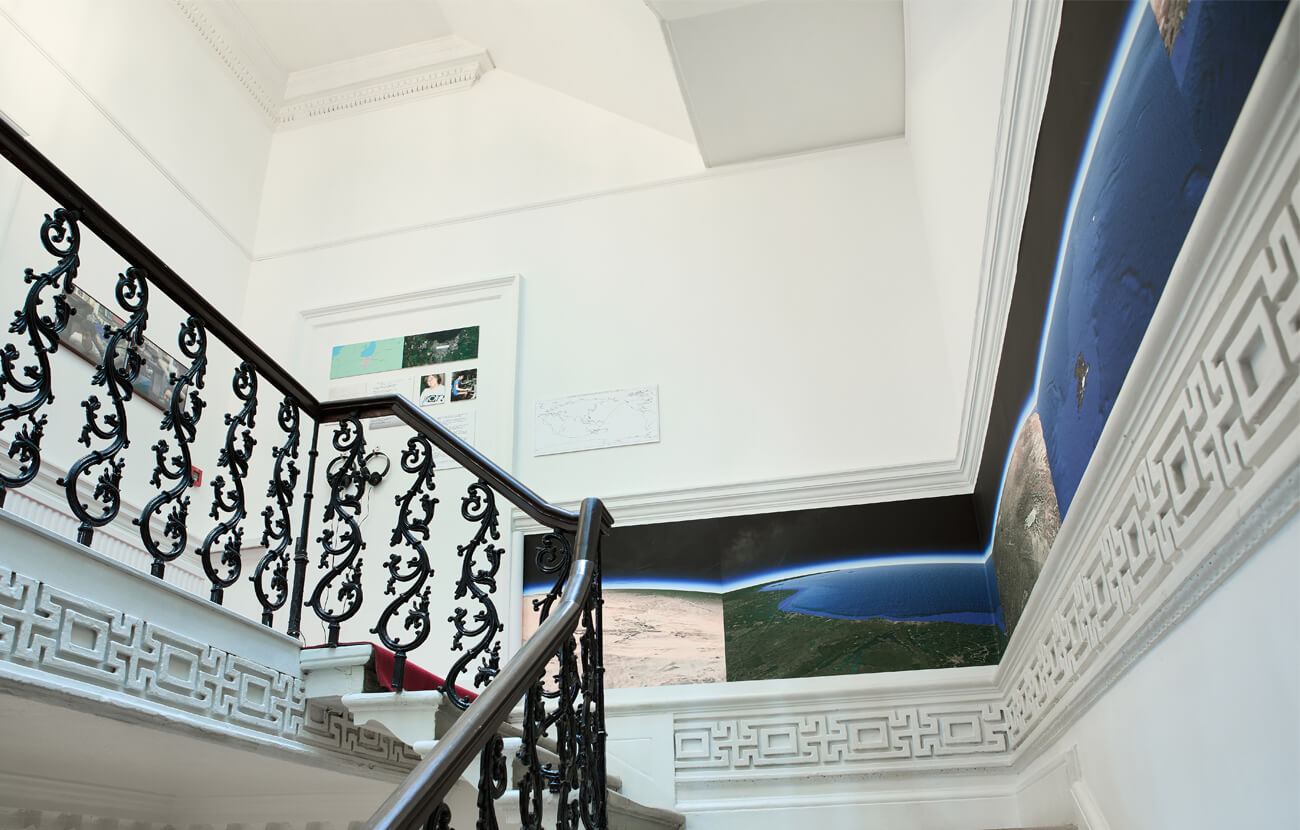
In 2025, Kallat transformed Pushkin House, London, into a control room for planetary reflection, where signals crisscross skyward and inward. Restaged in the Bikaner House stairwell, the project centers on December 26, 1991, when the Soviet Union was formally dissolved while two cosmonauts—Russia-born Sergey Krikalev and Ukraine-born Aleksandr Volkov—remained aboard the Mir space station. Suspended in orbit for several months and passing through sixteen sunrises every twenty-four hours, they became stateless before finally returning to Earth as “the last Soviets.”
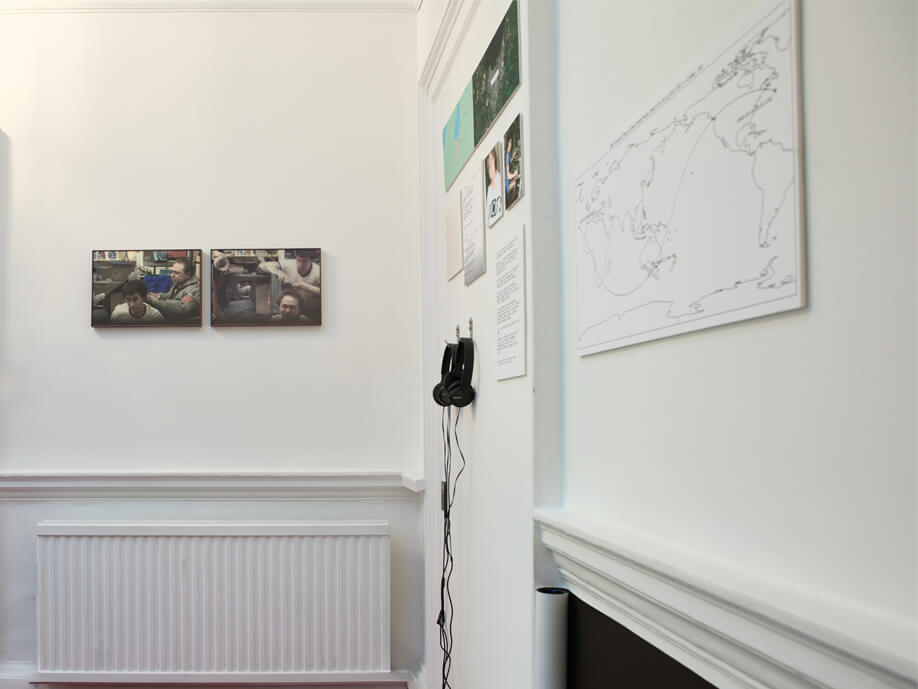
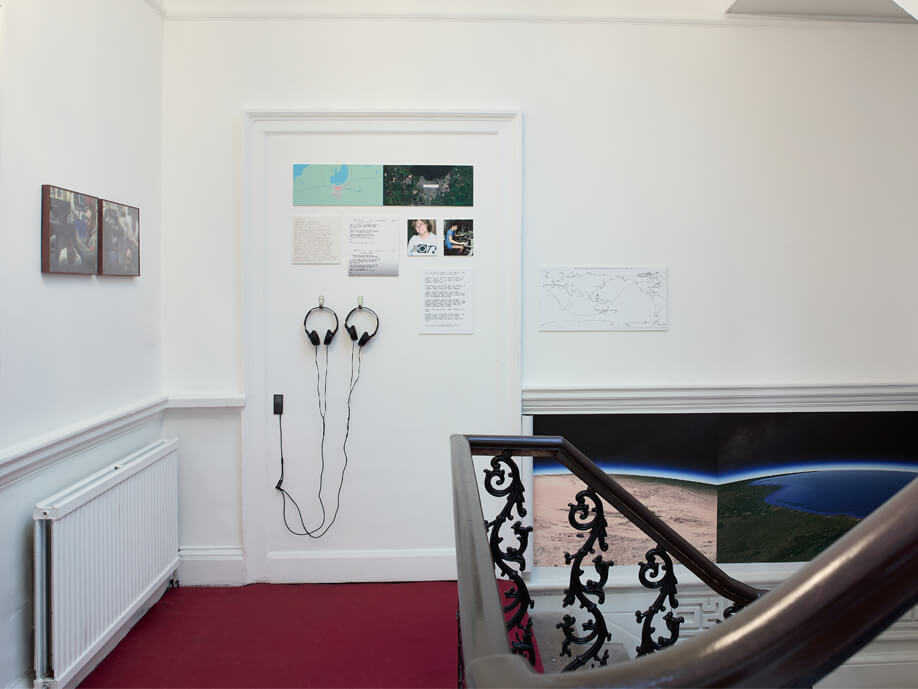
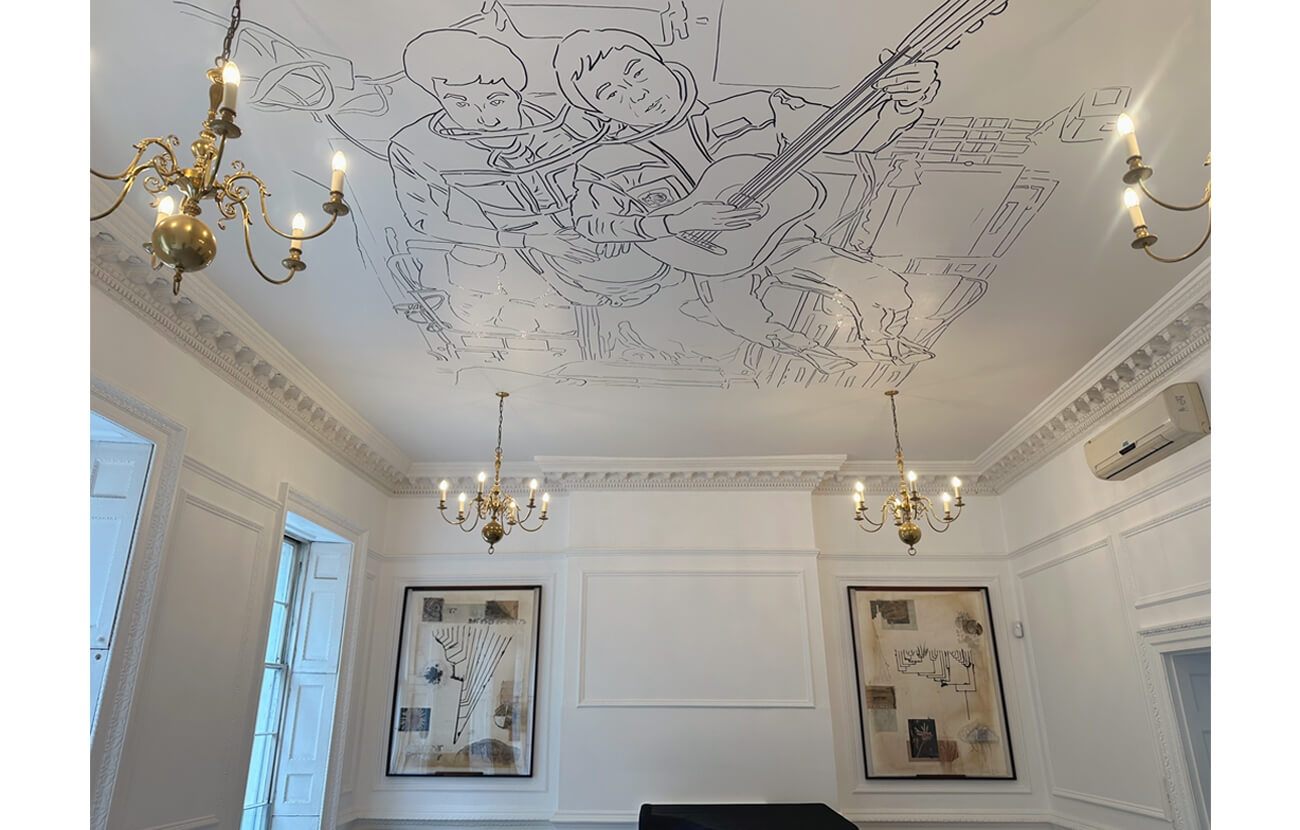
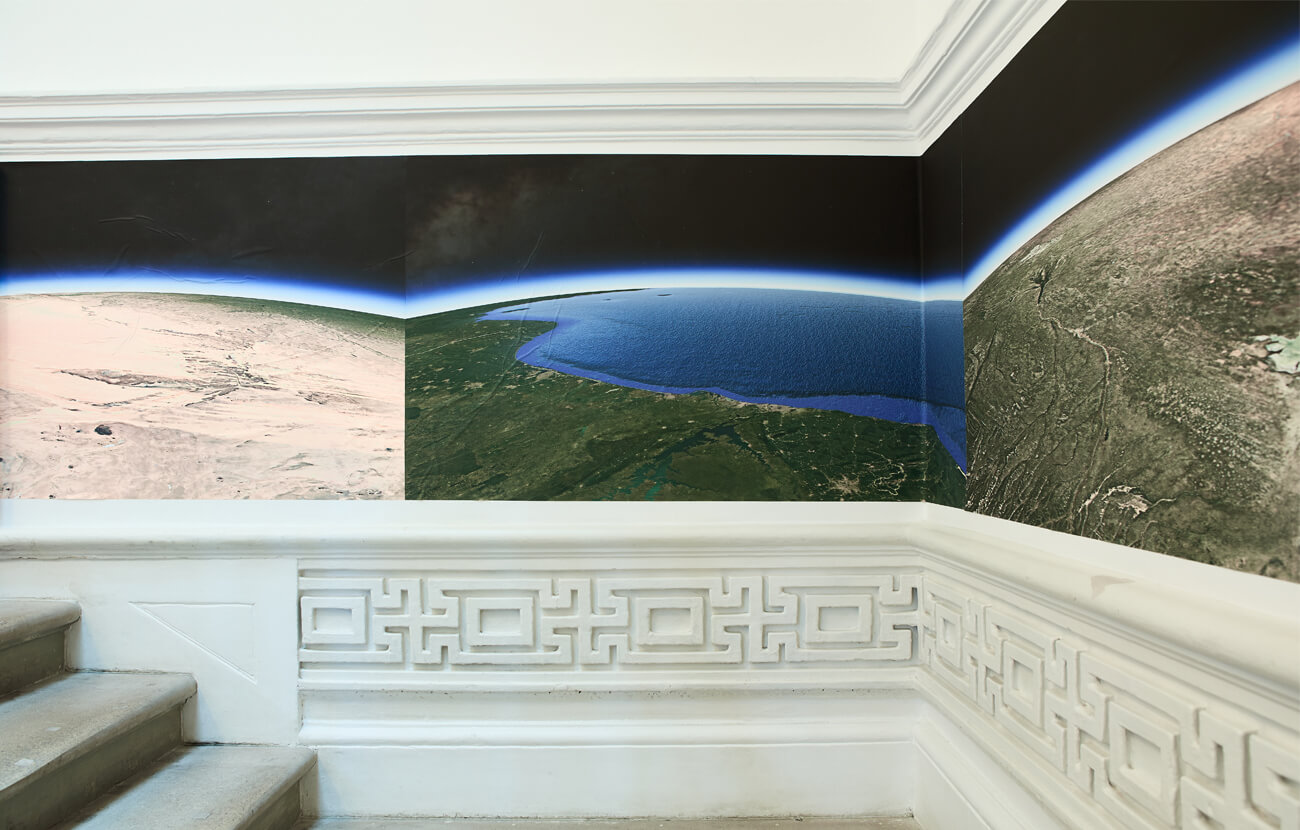
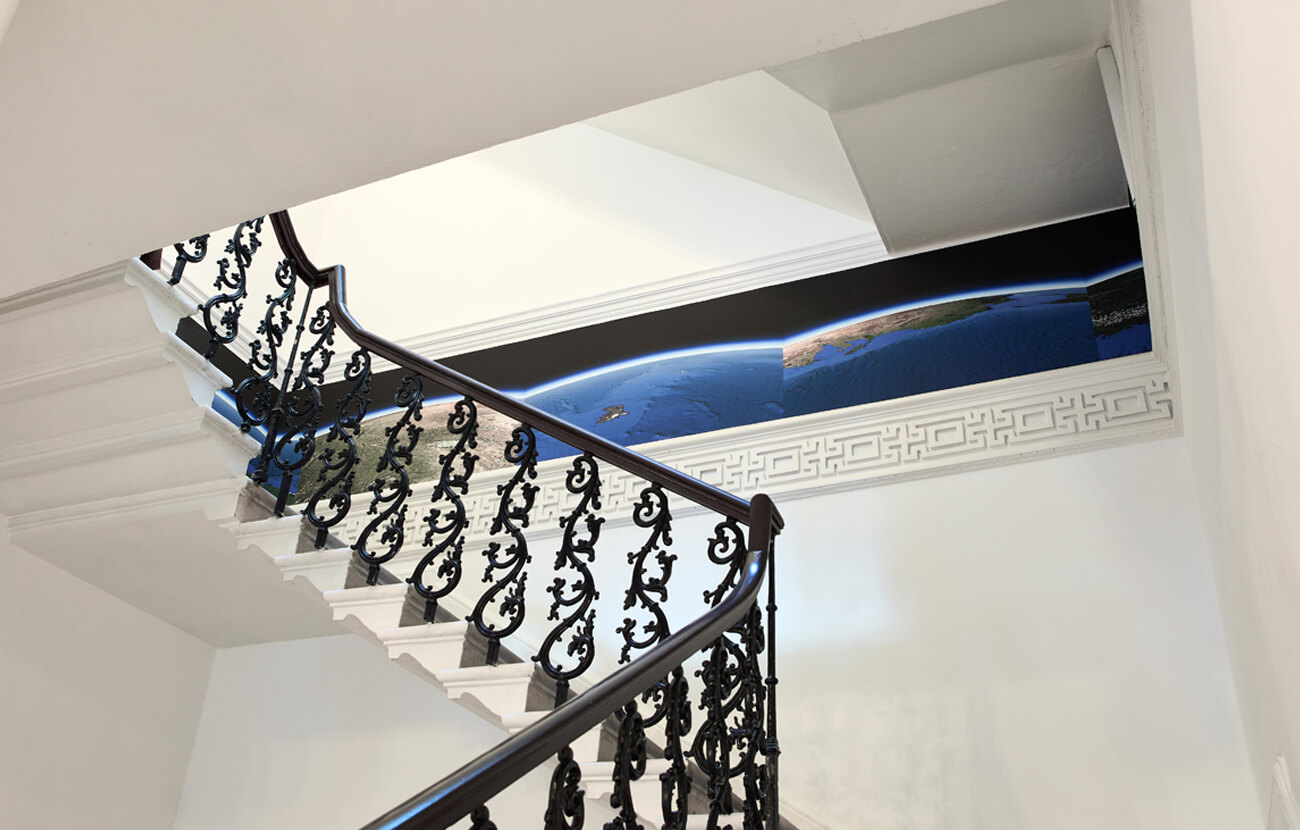
Drawing on archival footage of life aboard Mir, Kallat distills this episode into three registers, foregrounding the fragility of national borders, citizenship, and belonging when viewed from a cosmic distance. A large vinyl cut-out traces an image of Krikalev and Volkov playing music in their spacesuits, while lenticular prints along the wall depict moments of daily life in orbit, such as cutting each other’s hair. A projected horizon-like view of Earth is generated from the recorded orbit of the Mir space station on March 19, 1992, the night of Maggie Iaquinto’s final message to the cosmonauts. Using data from Space-Track, the U.S. government archive of satellite trajectories, Mir’s position and altitude at that moment were calculated and rendered. Google Earth is used as the visual interface for a continuously circling orbital view tracing the station’s path until the end of the mission on March 25, 1992.
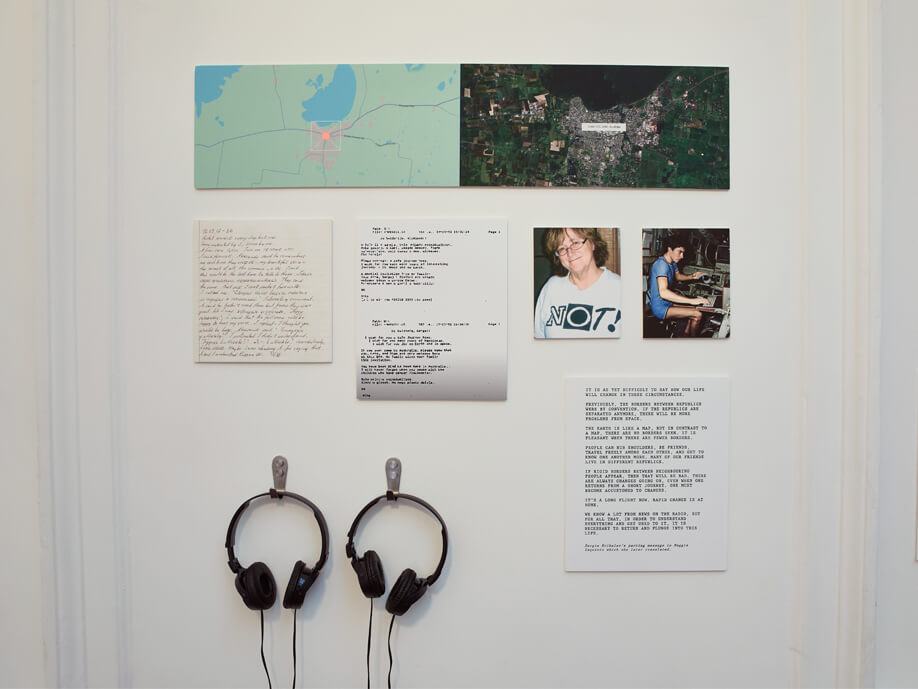
Audio recordings and transcripts register an ongoing correspondence. While passing over southern Australia, the cosmonauts remained in contact with Maggie Iaquinto, an amateur ham radio operator who developed a sustained exchange with Sergey Krikalev during the mission. These communications—at once mundane and uncanny—expose the vulnerability of political identity when rendered weightless, beyond the territorial boundaries of Earth.